
What Full-Length Mechanical Sewer Rodding Includes in Flossmoor, IL
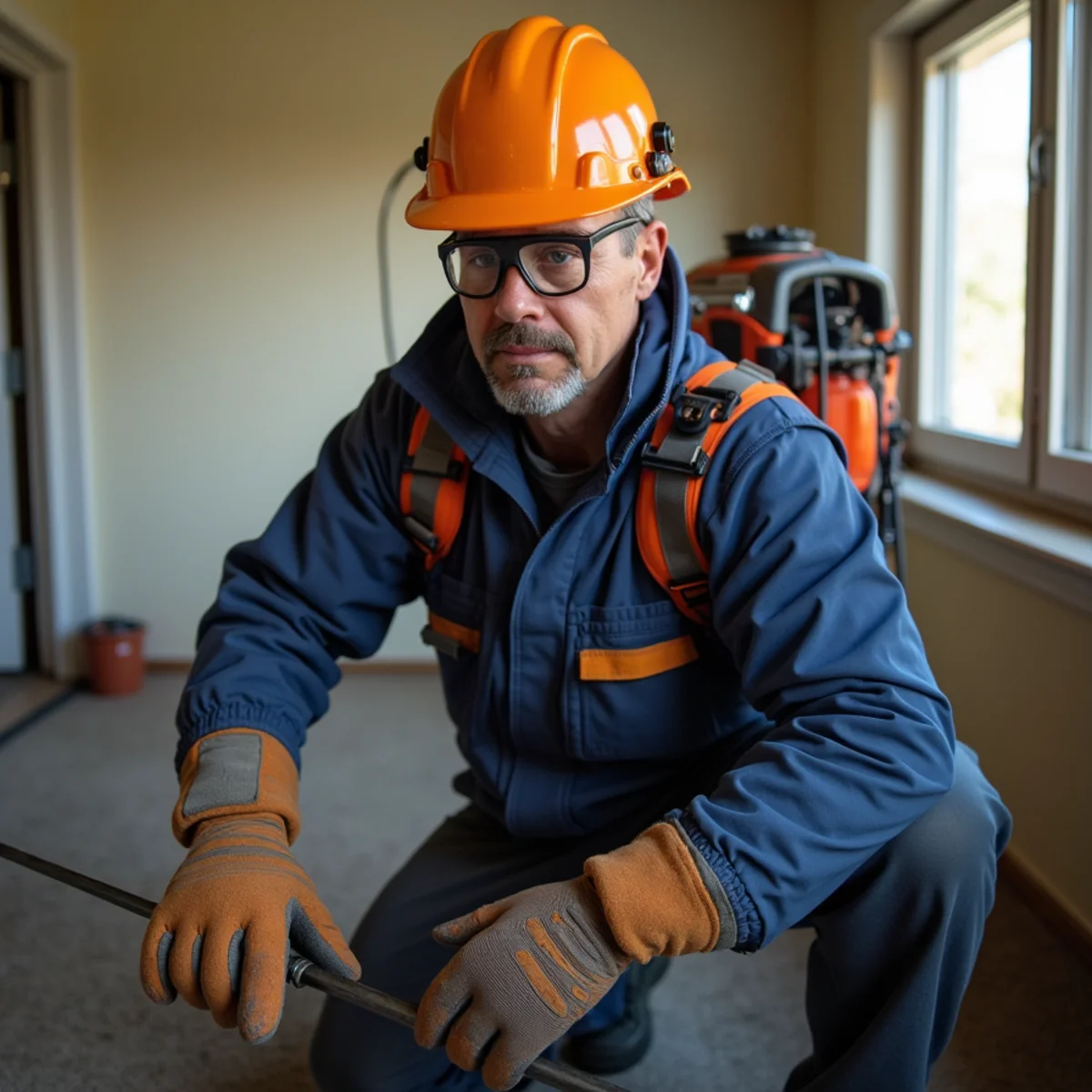
Mechanical sewer rodding is the heavy-duty standard for clearing compromised residential and commercial sewer laterals across Flossmoor, Homewood, and Olympia Fields. Unlike lightweight handheld snakes designed for simple sink traps, our industrial Spartan 1065 continuous rodders feed rigid sectional steel cables under intense motor-driven torque directly through your main sewer pipe. Every rodding service includes full-length line clearance from your cleanout all the way to the municipal sewer main in the street, custom-fitted expanding serrated steel cutter blades matched to your pipe's inner diameter (4-inch or 6-inch), high-volume water flush testing under operating head pressure, and preliminary video line assessment. We systematically cut through thick tree root plugs, calcified mineral deposits, and compacted grease masses that trap household waste. Our service scope covers full mechanical cutting across standard residential diameters, specifically addressing transitions from 4-inch cast-iron basement soil stacks to 6-inch vitrified clay tile street laterals. We employ sectional inner-core steel cables engineered to withstand up to 300 foot-pounds of rotational torque without kinking or twisting inside the pipe. By systematically passing progressing cutter heads—starting with a 2-inch spearhead retrieval bit to relieve immediate head pressure, advancing to a 3-inch C-cutter to core out the blockage center, and finishing with an expanding 4-to-6-inch serrated root saw—we scour the entire circumference of the pipe wall rather than merely punching a temporary pencil-thin hole through the clog.
Warning Signs of Main Sewer Lateral Obstruction
Recognizing early symptoms of main sewer lateral failure allows Flossmoor property owners to act before contaminated blackwater spills over finished basement floors. The most common warning indicator is multi-fixture drain backup: when running a washing machine or flushing an upstairs toilet causes wastewater to surge into basement floor drains, utility sinks, or shower pans. Other critical signs include persistent gurgling noises from lower-level plumbing fixtures, foul sewer gas odors lingering in utility rooms, slow drainage across every bathroom simultaneously, and soft, abnormally green or saturated patches in your front yard directly above the underground sewer path. If sewage has already begun backing up into basement floor drains, cease running all indoor water fixtures immediately and contact our dispatch desk for emergency priority triage. In south-suburban neighborhoods surrounding Flossmoor Road, Hagen Lane, Douglas Avenue, and the Metra/CN rail corridor, basement floor drains are positioned at the lowest elevation in the municipal gravity system. When heavy root obstruction impedes the lateral, household graywater from showers, washing machines, and dishwasher cycles has nowhere to discharge, rapidly surcharging through basement floor traps. If your basement floor drain bubbles or produces a hollow whistling noise when a toilet is flushed, air is being forced backward through water traps by an advancing main-line blockage. Catching these early hydro-mechanical cues prevents severe biohazard contamination and structural subfloor water damage.
Why Flossmoor's Glacial Clay Soils & Mature Trees Threaten Clay Laterals
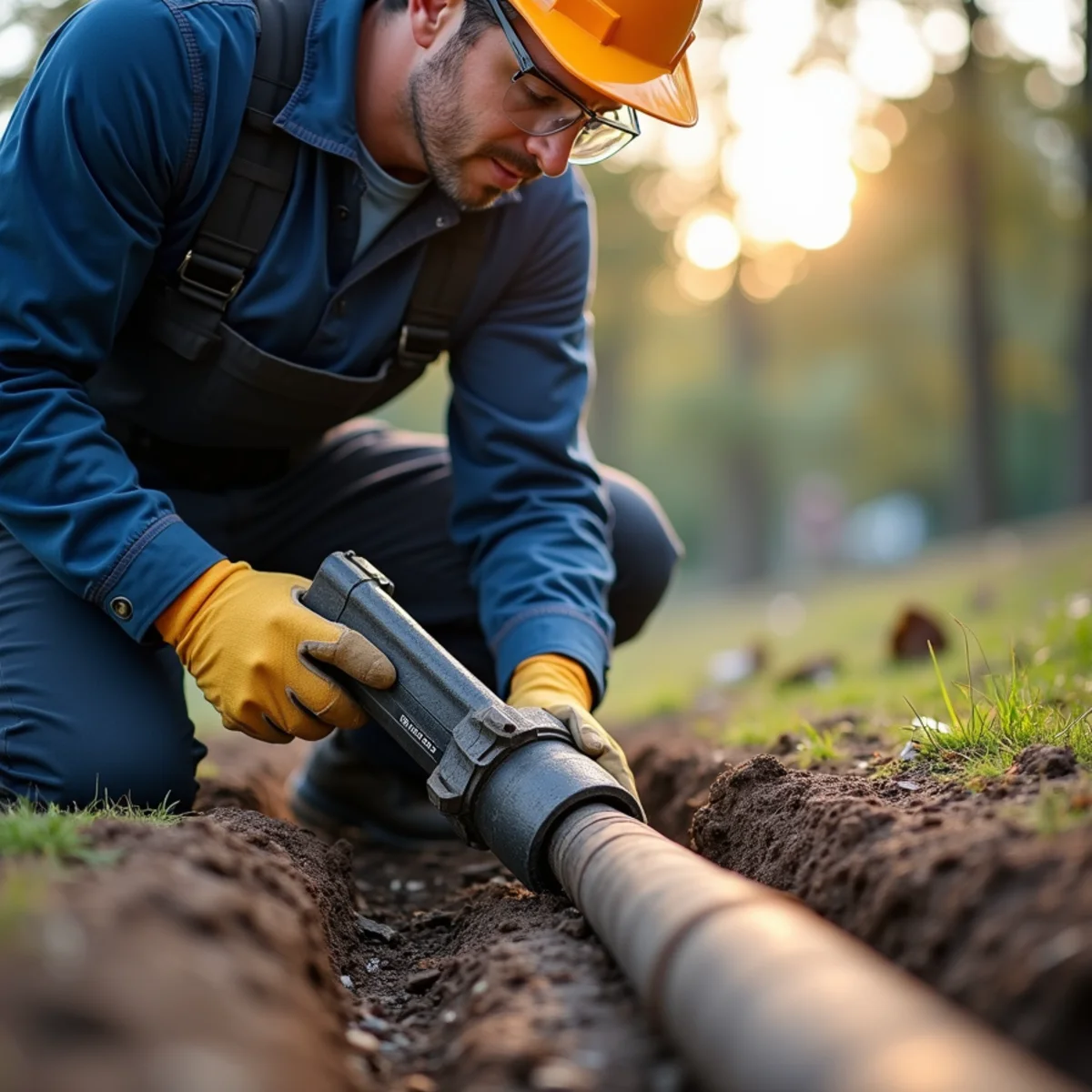
Central Rodding was established in Flossmoor in 1957 specifically to solve the persistent geological and environmental threats affecting South Suburban drainage. Approximately 41% of Flossmoor housing stock was constructed during the 1950s and 1960s, a period when builders installed vitrified clay tile pipe (VCP) for residential sewer laterals. Clay pipes were laid in short two-to-three-foot segments connected by porous mortar or oakum joints. Over decades, Flossmoor's expansive glacial clay soils subject these rigid pipes to severe hydraulic heave during wet spring seasons and contraction during summer dry spells. Concurrently, the village's magnificent canopy of mature bur oaks, silver maples, and weeping willows sends aggressive moisture-seeking root hair lines directly into joint separations. Once inside the moist, nutrient-rich pipe, root tips blossom into massive, dense wooden plugs that completely obstruct wastewater flow. The geological history of southern Cook County plays an active role in sewer lateral deterioration. During the Wisconsin glaciation, massive ice sheets deposited dense, unstratified glacial till dominated by expansive illite and smectite clay minerals. When wet, this soil heaves with tremendous force; during hot Chicago summers, it dries, shrinks, and shifts underground pipe bedding. In Flossmoor homes constructed between 1920 and 1968, vitrified clay pipe segments were sealed using cement mortar that degrades over four to five decades. As joints fissure under ground settlement, root hair lines from mature bur oaks, pin oaks, and silver maples sense vapor plumes. Once inside, roots feed on nitrates and phosphorus in household sewage, swelling into fibrous masses capable of completely shearing clay pipe bells.
Our 5-Step Field Rodding Sequence from Exterior Cleanouts
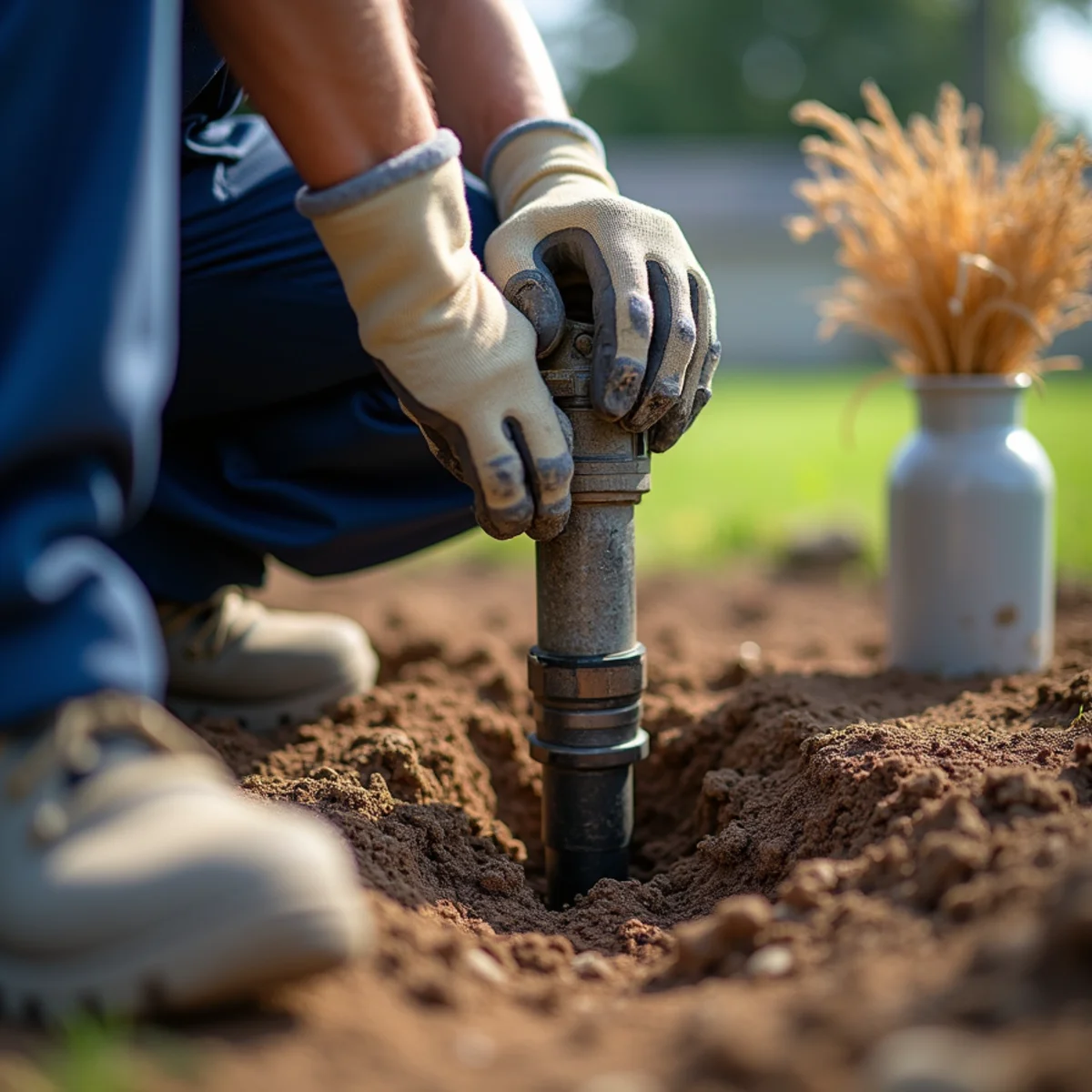
We follow a disciplined, five-step field sequence engineered to protect your home's interior and ensure complete lateral clearing. Step 1: Exterior Cleanout Location & Access. We prioritize rodding through an outside ground-level cleanout in your lawn or landscaping bed, keeping dirty cables and sewage splatter entirely out of finished living spaces without the need to pull indoor toilets. Step 2: Mechanical Entry & Obstruction Relief. Our technicians feed heavy-gauge steel cables with pilot drill heads to puncture and relieve hydrostatic head pressure in the backed-up lateral. Step 3: Circumferential Root Shaving. We attach custom-tempered, expanding spring-steel saw blades sized to the full internal diameter of your pipe, rotating at high RPM to shave root masses flush against the interior pipe walls. Step 4: High-Volume Flush & Flow Verification. We run maximum volume through the line to carry pulverized root fragments into the municipal collector main. Step 5: Post-Service Camera Verification & Warranty. We conduct a color video camera inspection to confirm the lateral is clear of structural blockages and issue our 1-year workmanship warranty. Every cleanout rodding procedure is managed by experienced field operators who understand pipe friction and torque limits. Prior to feeding cables, our technicians place heavy rubberized runner mats across adjacent lawn areas to safeguard landscaping and exterior brickwork. When entering through two-way exterior cleanouts, we rod both directions: downstream toward the municipal sanitary main under the street, and upstream toward the house foundation wall to verify the entire system is free of grease deposits or paper obstructions. Following mechanical cutting, we run continuous municipal water at 15 to 20 GPM to flush loosened root shavings out to the public collector line, preventing secondary downstream blockages.
Sewer Rodding Cost Factors in South Suburban Cook County
Planning for sewer lateral maintenance requires clear, transparent pricing rather than hidden surcharges. Published South Suburban Cook County planning figures for main sewer line mechanical rodding from an exterior cleanout typically range from $150 to $350. The final cost of main-line rodding depends on four primary field variables: the total distance from the access point to the municipal connection (residential laterals in Flossmoor typically run between 60 and 120+ feet), the density and maturity of root infiltration (light seasonal root hair versus heavy woody tap roots requiring multiple cutter passes), whether the technician can access the line via a pre-installed two-way exterior cleanout versus an indoor basement cleanout plug, and whether emergency after-hours dispatch is required. Central Rodding provides upfront line-item estimates on-site before any equipment is engaged. For properties lacking an exterior cleanout, accessing main lines through cramped basement drum traps or pulling indoor toilets introduces additional labor variables, typically adding $100 to $200 in fixture reset and wax ring replacement costs. Furthermore, if a sewer line has sustained structural offset, pipe collapse, or belly sagging, mechanical rodding alone may not restore permanent flow. In those instances, our technician itemizes options between routine rodding maintenance plans, high-pressure hydro-jet scouring ($350–$650), or trenchless spot structural lining ($1,100–$4,500), ensuring property owners have complete financial clarity.
Village of Flossmoor Municipal Codes, Surety Bonds & Licensing
Sewer and plumbing work in Flossmoor is strictly regulated to protect public health and the integrity of municipal infrastructure. Under Village of Flossmoor ordinances, any plumbing work or structural sewer repair exceeding $100 requires a municipal permit and subsequent inspection by the local building department. Contractors working on sanitary sewer connections must hold active registration with the Illinois Department of Public Health (IDPH) and maintain an active $10,000 surety bond filed with the Village of Flossmoor. Central Rodding maintains full municipal bond compliance, comprehensive commercial general liability insurance, property damage coverage, and workers' compensation. When your lateral requires spot excavation or cleanout installation, we handle all municipal permitting, JULIE underground utility locating, and village inspection coordination on your behalf. Compliance with the Illinois Plumbing Code (77 Ill. Adm. Code 890) and local Flossmoor building ordinances safeguards homeowner liability during underground sewer work. All field personnel operating under Central Rodding Total Sewer Service, Inc. are fully certified, with proof of license, registration, and active bonding presented upon request. When lateral rodding identifies a sheared clay pipe requiring structural excavation, our management files all required municipal permit applications with Village Hall at 2800 Flossmoor Road, requests expedited utility markings through JULIE (Illinois One-Call System), and coordinates required municipal engineering inspections.
Why Flossmoor Homeowners Rely on Central Rodding Since 1957
For 69 years, Central Rodding Total Sewer Service, Inc. has remained an authentic, family-owned south-suburban staple. Owned and operated by master sewer contractor James Hepworth, alongside veteran senior technician Wayne, our team brings multi-decade experience to every job site. We do not use commission-driven sales tactics or push unneeded sewer replacements when mechanical rodding and root cutting can reliably restore your line. We are an accredited Better Business Bureau company maintaining an A+ rating with zero consumer complaints. When you call (614) 830-0578, our trucks roll directly from 3718 198th St in Flossmoor with an average emergency arrival time of 15 to 30 minutes throughout Flossmoor, Homewood, and Olympia Fields, backed by zero travel fees across our entire primary south-suburban territory. Originally founded in Flossmoor by James, Patricia, and Laurie Hepworth, Central Rodding has been listed in The Blue Book of Building and Construction since 1958. We maintain our foundational commitment to honesty: we never recommend costly open-trench sewer excavation or lining unless video camera evidence demonstrates that mechanical rodding cannot restore structural integrity. Our service trucks are outfitted with comprehensive repair inventory, self-contained power generators, and professional wash-down tanks, guaranteeing that your property is left spotless and your sewer lateral is flowing at 100% capacity.
Part of our Sewer Services Division
Explore complete equipment specifications and related maintenance programs.
Serving South Suburban Property Owners
We provide professional sewer rodding across these neighboring communities: